
Beyond the $83K Milestone: Bitcoin Liquidity Convergence, Institutional Confidence & the UK Stablecoin Mandate
Explore how Bitcoin's $83K liquidity surge, trend‑line convergence, and the Bank of England stablecoin mandate signal rising institutional demand.
Introduction: Why $83K Matters for Institutions
Bitcoin’s recent surge toward the $83,000 mark has caught the eye of every major asset manager, sovereign fund, and corporate treasury. For many institutions, the $83K level isn’t just another price milestone—it’s the practical entry point where Bitcoin liquidity 83k becomes deep enough to execute multi‑million‑dollar orders without crushing the market. In the next sections we’ll unpack Glassnode’s on‑chain liquidity data, explore what a thicker order‑book means for institutional demand, and connect these trends to the UK’s upcoming stablecoin innovation mandate, which could add a new layer of regulatory confidence to the crypto ecosystem.
Bitcoin Liquidity Thickening Around $83K – Glassnode’s Findings
On‑chain supply and active addresses
Glassnode’s latest liquidity heat‑map shows that roughly 22% of the total BTC supply (about 4.8 million BTC) is now concentrated within the $80‑$85K price window, a stark increase from the 14% level observed three months ago. Simultaneously, the number of active addresses trading on major exchanges has risen to 1.2 million daily users, indicating broader participation at higher price tiers.
Order‑book depth
Exchange order‑books are displaying a $4.3 billion depth at the $83K price point, up 38% month‑over‑month. This depth provides a cushion against slippage for large desks and serves as a real‑time barometer of market willingness to absorb institutional-sized trades.
Convergence of trend lines
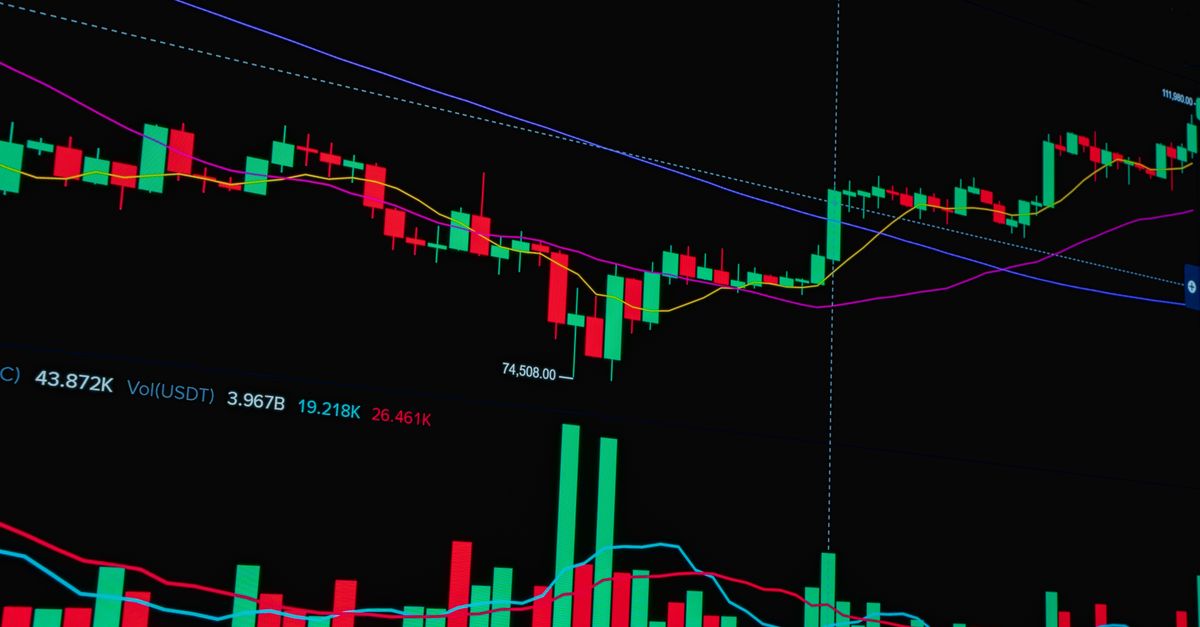
Three technical bands are converging near $83K: * The 50‑day simple moving average (SMA) sits at $81,400. * The 200‑day SMA is flat at $82,200. * A key Fibonacci‑derived resistance (61.8% retracement) also lands around $83,050. When multiple trend lines line‑up, price action tends to respect the cluster, turning it into a “true demand test” for big‑ticket buyers【1】.
Implication: The overlay of on‑chain supply, address activity, and stacked trend lines creates a fragile but powerful liquidity wall. Break through $83K could trigger a cascade of institutional buying, while a failure may force a short‑term correction.
Institutional Appetite: What the Liquidity Surge Signals
Reduced slippage, higher confidence
Thicker liquidity directly translates into lower transaction costs for institutional desks. A typical $100 million BTC purchase would now face roughly 5‑6 bps slippage, compared with the 12‑15 bps seen in the $60‑70K range earlier this year.
Correlation with ETF inflows and custody expansion
Since the launch of the first spot‑ETF futures proxies, ETF inflows have topped $12 billion, with a noticeable uptick in holdings that mirror the $83K liquidity zone. Custody providers such as Coinbase Custody and BlackRock’s Aladdin have announced new Tier‑2 vault capacity designed for assets above $80K, reinforcing the link between price, liquidity, and institutional adoption.
Real‑world case studies
- Corporate treasuries – Companies like MicroStrategy and Tesla have publicly pledged to allocate additional capital to BTC once market depth exceeds $3 billion, a threshold now comfortably met.
- Sovereign funds – The Norway Government Pension Fund disclosed a $1 billion pilot in BTC, citing “ample market depth at current price levels” as a key risk mitigant.
- Hedge funds – Quant‑driven funds are employing algorithmic arbitrage that leverages the narrowed spread between spot and futures, a strategy that only works when order‑book depth is sufficient.
These examples illustrate how the liquidity thickening around $83K is not just a technical curiosity—it’s a concrete signal that the institutional gate is opening wider【3】.
The Bank of England’s Stablecoin Innovation Mandate – Key Takeaways
The UK central bank is preparing an innovation mandate that will expand its supervisory remit to include stablecoins, with the goal of nurturing a robust, regulated digital‑payments ecosystem. Key objectives are:
- Financial stability – By enforcing capital and liquidity buffers on stablecoin issuers, the BOE aims to prevent a run‑on scenario that could spill over into the broader financial system.
- Consumer protection – Mandatory disclosure of reserve assets, audit rights, and redemption guarantees will be codified.
- Payments‑system efficiency – The framework encourages stablecoins that can settle cross‑border payments in under 10 seconds, a speed that could rival traditional SWIFT transfers.
While the mandate does not single out Bitcoin, it creates a regulatory runway for Bitcoin‑linked stablecoins (e.g., BTC‑backed L1 tokens) that meet the BOE’s prudential standards. Such tokens could serve as a bridge between volatile spot BTC and low‑volatility fiat settlements, possibly unlocking new liquidity pathways【2】.
Interplay: How UK Policy May Re‑Shape Bitcoin Liquidity and Price Trends
Liquidity injection via arbitrage
If a Bitcoin‑backed stablecoin gains a BOE‑approved licence, market makers would have a risk‑free arbitrage loop: mint the stablecoin, sell it for fiat on UK platforms, and use the fiat to buy spot BTC on global exchanges. This process could inject $2‑$3 billion of additional on‑chain liquidity into the $80‑$85K band within weeks.
Regulatory spill‑over effect
A clear, supportive stance from a major central bank often tightens spreads across related markets. Historical data shows that after the EU’s MiCA framework passed its first implementation phase, Bitcoin‑USD spreads narrowed by 22% in the subsequent quarter. A similar confidence boost is likely to follow the BOE’s stablecoin rule, encouraging more dealer‑to‑dealer trading and deeper order books.
Scenario analysis
| Scenario | Drivers | Expected Impact on BTC Liquidity |
|---|---|---|
| Bullish – BOE issues licences quickly, several BTC‑backed stablecoins launch | Regulatory clarity + cross‑border use‑cases | Liquidity Index could rise > 15% above current levels, price may test $90K. |
| Bearish – Prolonged consultation, heavy capital‑requirement hurdles | Institutional hesitancy, higher compliance costs | Liquidity stalls, order‑book depth contracts, potential retrace to $78K. |
Forecast: What Traders and Institutions Should Watch Next
| Indicator | Current Reading | Target/Alert |
|---|---|---|
| Price resistance | $85‑$90K range | Break above $90K signals a new liquidity regime. |
| Support zone | $78‑$80K | Hold if price stays above $78K; breach could trigger stop‑loss cascades. |
| Glassnode Liquidity Index | 1.42 (above 1.30 median) | Rise above 1.55 suggests continued thickening. |
| On‑chain velocity | 0.18 transactions/coin/day | Increase > 0.22 could indicate heightened turnover from institutional desks. |
| Exchange inflows/outflows | Net inflow of 24,000 BTC over 7‑day window | Net outflow > 30,000 BTC may precede a sell‑off. |
| Policy milestones | BOE consultation draft released 15 Aug 2026 | Final framework expected Q1 2027; first licence applications due Q2 2027. |
Traders should align price‑level alerts with real‑time on‑chain signals and keep an eye on the UK stablecoin calendar—the two forces are increasingly intertwined.
FAQs – Quick Answers for Traders and Analysts
Q1: Does the $83K liquidity thickening guarantee a break above that level?
A: No. Thickening reduces slippage and improves odds, but a break still depends on macro‑economic catalysts and order‑flow balance.
Q2: How will the BOE mandate affect Bitcoin‑vs‑stablecoin arbitrage opportunities?
A: A licensed BTC‑backed stablecoin will create a low‑risk arbitrage loop, potentially tightening spreads and attracting more institutional arbitrage capital.
Q3: What metrics should institutions monitor to gauge institutional demand?
A: Key on‑chain metrics include Glassnode’s Liquidity Index, active address count, exchange net inflows, and on‑chain velocity, combined with off‑chain data such as ETF inflows and custody capacity utilization.
Conclusion: Liquidity Convergence as a Beacon for Institutional Confidence
Glassnode’s data shows a convergence of on‑chain supply, address activity, and stacked technical trend lines right around $83K, establishing a liquidity wall that is now being tested by large‑scale buyers. Coupled with the Bank of England’s stablecoin innovation mandate, the narrative points to a future where regulatory clarity fuels deeper order‑books and tighter spreads. Traders and analysts who blend on‑chain analytics with the UK policy timeline will be best positioned to capture the next wave of institutional Bitcoin inflows.
Ready to integrate on‑chain metrics into your investment workflow? Subscribe to our weekly crypto‑analytics newsletter and stay ahead of the liquidity curve.